REPORTS · 6 मिनट पढ़ने में ·
How to read a blood test report without panicking
Reference ranges, flags and units: what the columns on your lab report mean, and which results deserve a call to your doctor today.
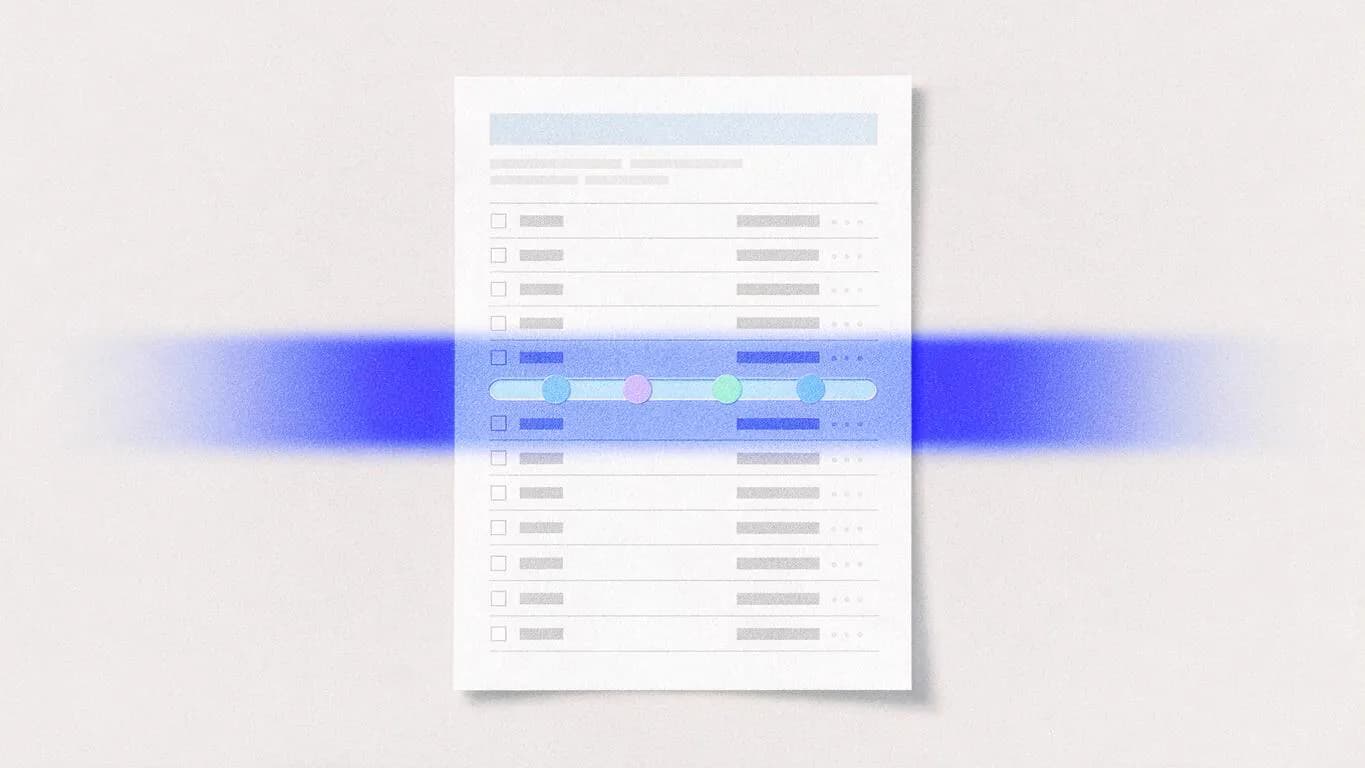
A lab report can look like a wall of numbers. But once you know how to read a blood test report, most of them follow the same simple layout: the test name, your result, the unit, and a reference range. Learn what each column does and the page gets a lot less scary.
Before you read the numbers
Take ten seconds to check three things at the top of the page:
- It is your report. Your name and date of birth should match.
- The date and time of the draw. This helps you line it up with earlier reports, and some values change through the day.
- How you prepared. Note whether you fasted, exercised hard or took any new medicine or supplement before the test. These can all move a result.
The four columns on most reports
| Column | What it tells you | What to check |
|---|---|---|
| Test name | What was measured | Short forms like ALT, TSH or HbA1c |
| Result | Your number | Any flag, colour or bold text next to it |
| Unit | How it was measured | That it matches before you compare |
| Reference range | Where most healthy people fall | That it is the range on this report |
Some reports add a flag column, such as "H" for high or "L" for low, or highlight values in colour. A few also show your previous result next to the new one, which is very useful.
The reference range is not a verdict
The range is built by testing a large group of healthy people, often at least 120, and taking where the middle 95% of them fall. That means about 1 in 20 healthy people land just outside the range on any single test. A value slightly outside the range is a reason to look closer, not proof that something is wrong.
Ranges also vary. Age and whether you're male or female are the most common reasons. Creatinine, for example, has different ranges for men and women, because men usually carry more muscle. Children and pregnant women have their own ranges. The lab's equipment and methods matter too, so always use the range printed on your own report, not one you found online.
Look at the unit before the number
The same test can be reported in different units in different countries. Glucose is the classic example:
- a fasting glucose of 126 mg/dL is the same as 7.0 mmol/L
- 100 mg/dL is about 5.6 mmol/L
HbA1c, a longer-term sugar test, also comes two ways. In the UK it is often given in mmol/mol, elsewhere as a percentage. 48 mmol/mol is the same as 6.5%.
Other units you may see include mcg/dL, micromol/L and pg/mL. If you compare reports from two labs, check that the units match first. Even when they do, labs can use different methods, so it is safest to compare a value with itself at the same lab over time.
A worked example
Say your report shows a fasting glucose of 5.9 mmol/L with an "H" next to it.
- Check the unit. It is mmol/L, so compare it only with ranges given in mmol/L, not mg/dL.
- Find where it sits. Fasting values from 5.6 to 7.0 mmol/L (100 to 125 mg/dL) are the band often called prediabetes. Diabetes is usually only diagnosed at 7.0 mmol/L (126 mg/dL) or above, on two separate tests.
- Think about the day. Did you really fast? Were you unwell?
- Look for a partner value. Is there an HbA1c on the same report, or an earlier glucose to compare?
None of this gives you a diagnosis. It gives you a clear, calm question to take to your doctor.
Patterns matter more than one number
Doctors rarely read a single result on its own. They look at how values fit together, and how they have changed.
- HbA1c and glucose. A glucose result is a snapshot of one moment. HbA1c reflects your average blood sugar over roughly the last two to three months. Read together, they describe both the day and the bigger picture.
- Cholesterol. In the UK, healthy adult levels are a total cholesterol under 5 mmol/L, non-HDL under 4 mmol/L, and HDL above 1.0 mmol/L for men or 1.2 mmol/L for women. But your doctor combines these with your age, blood pressure and other conditions to estimate heart risk. Levels can also shift if you've been ill, started some medicines, or recently had a baby.
- Trends over time. A value that creeps the same way across three reports tells you more than one value just over the line.
What can nudge a result
Plenty of everyday things can move a number without anything being wrong:
- what you ate or drank, and whether you fasted when asked
- medicines and supplements
- hard exercise before the test
- your period
Tell the person ordering the test about every medicine and supplement you take, including ones you buy without a prescription.
What a normal result can and can't tell you
A result inside the range is reassuring. But it is not a promise. Some people with real health problems still get normal-looking numbers. If you have symptoms that don't match a clean report, say so. More tests, or a repeat later, may help.
The reverse is also true. Healthy people often have one or two values outside the range. Your doctor reads your results alongside your history, an exam, your family history and sometimes scans. Together, these tell them far more than any single number.
When a repeat test makes sense
A second test is common and rarely a bad sign. Doctors often repeat a test when:
- a result is uncertain, neither clearly normal nor clearly abnormal
- a result looks out of keeping with how you feel, so it might be inaccurate
- they want to confirm an abnormal result before acting on it
- they are checking whether a condition, or a treatment, is changing over time
If you can, have the repeat at the same lab and at a similar time of day, after the same preparation. That way, any change you see is more likely to be about you rather than about the method.
Keep your old reports together, in date order. When a new one arrives, put it next to the last one before you read it. The change between them is often the most useful thing on the page.
Results that should not wait
Labs keep a "critical" range for values they treat as possibly life-threatening. When a result lands there, the lab usually alerts a doctor straight away, who then contacts you. Call a doctor the same day if your report marks a value as critical and no one has been in touch.
Symptoms matter more than the page. If you have chest pain, trouble breathing, confusion, severe weakness or you faint, call your local emergency number. Don't wait to look up your results.
Questions worth asking
- Is this result new, or has it been like this before?
- Does it need a repeat test, and when?
- Could any medicine or supplement I take explain it?
- What would change if it goes up or down next time?
Saluvo can help you keep track: two AI models read each report, you confirm any value they disagree on, and you can see trends across your reports. It never replaces the conversation with your doctor.
SOURCES
- Reference Ranges and What They Mean (Testing.com)
- How to Understand Your Lab Results (MedlinePlus)
- Diabetes (MedlinePlus Medical Encyclopedia)
- What is HbA1c? (Diabetes UK)
- High cholesterol: Cholesterol levels (NHS)
- Frequently Asked Questions About Lab Testing (Testing.com)
Saluvo स्वास्थ्य की जानकारी देता है, चिकित्सकीय सलाह नहीं। निदान और इलाज के बारे में हमेशा किसी योग्य डॉक्टर से बात कीजिए।